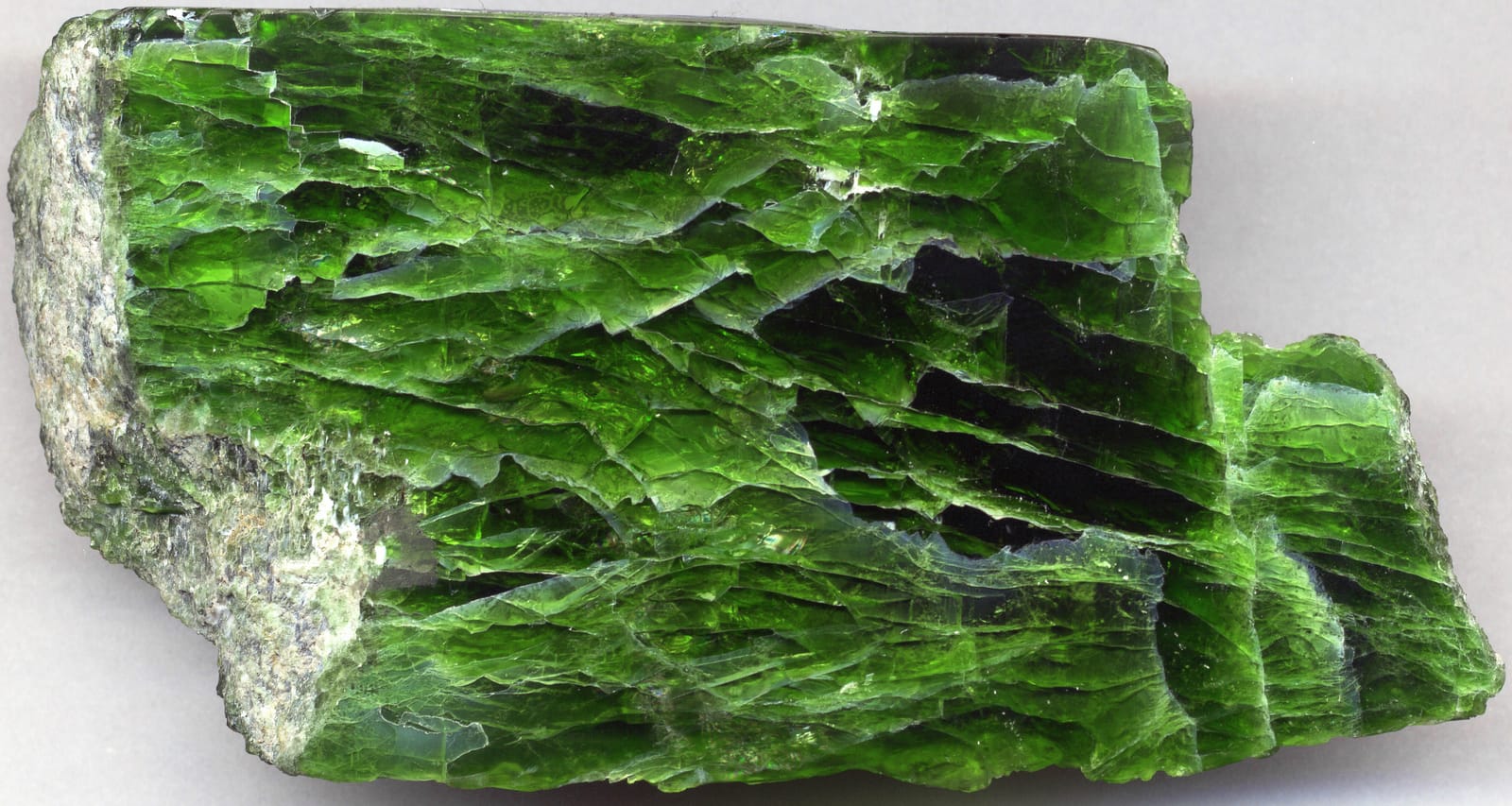
Russian chrome diopside from Yakutia
Russia is the main source of gem-quality chrome diopside, and it comes mainly from one place: the Inagli deposit in the Sakha Republic (Yakutia), where the weather allows mining only in summer.
Updated
Short answers
Where it is mined
GIA places the deposit, known as Inagli, in the Republic of Sakha, and names Russia the primary source of gem-quality chrome diopside.[1] Geologists describe Inagli as a zoned alkaline-ultrabasic complex in the Aldan Shield, with a dunite core and a platinum and gold placer nearby.[4] The chrome diopside occurs in potassic alkaline-ultrabasic rocks of the northwestern Aldan Shield.[3]
How it is mined
Harsh weather and terrain limit the mining season to the summer months.[1] A 2004 trade report described nine-month winters too cold to mine.[5] The stone began appearing in the jewelry trade in 1988, although the Smithsonian holds a 2.83 carat stone from Yakutia that it obtained in 1981.[2]
What Russian chrome diopside looks like
Its green comes from chromium; analyses of Inagli stones found between 0.13 and 0.75 percent chromium oxide by weight.[3] As with all chrome diopside, larger stones turn very dark, which is why most are under 3 carats.[2] We have found no reliable source that compares Russian and Pakistani material, so we make no claim that one looks different from the other.
Names you will see
The trade sometimes calls chrome diopside "Russian emerald".[2] A producer trademarked the name "vertelite" in 2004.[5] Neither makes it emerald: the US Federal Trade Commission's Jewelry Guides treat an incorrect varietal name as deceptive.[10] Sibirlit takes its name from Siberia, where this stone comes from. See chrome diopside vs emerald.
Reading origin claims
Most listings don't state an origin. When one says "Russian" or "Yakutian", that is the seller's claim. Our tracker records origin exactly as the seller writes it (how we collect prices). Ask for the claim in writing, and for an expensive stone, ask whether an independent laboratory has reported on it.
For buyers in the United States
US import bans on Russian goods under Executive Order 14068 cover diamonds, gold and certain other goods; none of the published determinations covers colored gemstones such as chrome diopside.[7] Russian goods pay "Column 2" duty rates,[9] which for cut, unset gemstones for jewelry (subheading 7103.99.10) is 10% instead of free.[8] This is general information, not legal advice; rules change, so check before importing.
See chrome diopside listings Chrome diopside buying guide
Sources
- GIA: Tao Hsu and Andrew Lucas, "The Great Potential of Diopside in the China Market" (June 19, 2015)
- Smithsonian National Museum of Natural History: Chrome diopside, Geogallery
- Geochemistry International: Naumov et al., vol. 46, no. 6 (2008) (abstract)
- Mineralium Deposita: Svetlitskaya et al. (2018) (abstract)
- JCK: Gary Roskin, "Diopside" (October 1, 2004)
- International Gem Society: Green gemstones
- US Treasury, OFAC: Russian Harmful Foreign Activities Sanctions
- US International Trade Commission: Harmonized Tariff Schedule, heading 7103.99
- US Customs and Border Protection: Russia Column 2 rates of duty
- US Federal Trade Commission: Guides for the Jewelry, Precious Metals, and Pewter Industries, 16 CFR 23.26 (via Cornell LII)
Checked November 20, 2026. Sources can disagree; where they do, we say so or give the widest range. Dealers' pages may favor what they sell. Spotted an error? Write to us via the About page.